May 04, 2008

David Aplin

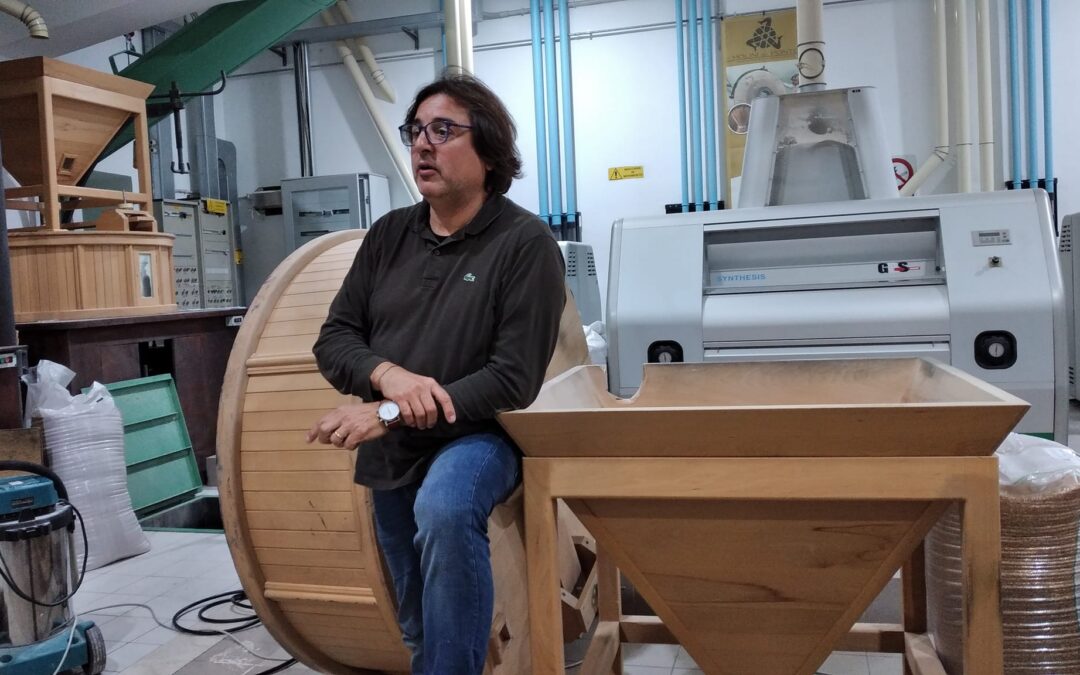
Dscn0194_2 Though I haven't yet met David Aplin, what connects us is the mutual devotion to baking bread. He and his wife  Camelia are bakers in Toronto whose micro bakery stands in their backyard. Once a month they stoke wood in the stone oven that David and his brother built and bake batches of bread. Their core customer base is increasing, helped by publicity from  local radio.

The blog Cliffsidebakery is a testament to the intrepid nature of their venture. David works all day baking at his job in a grocery store, then returns home to do the same thing. It sort of reminds me of my own obsession with food and baking. Needless to say, in our interview we talk about bread; the lack of rye bread on bakers shelves and how to promote this wonderful grain, how he managed to cross into Canada with some levain from Jeffrey Hamelman's class in Vermont, and even a story about Iggy Pop our mutual idol.


Click to listen   Podcast

April 29, 2008

How's that spelt?

Spelt is grain that is the  current rage in some baking circles. That mystifies me.This bronze age cousin of wheat has peculiar profiles that deem it healthy but is very difficult to handle. First, it has a weak gluten structure and doesn't rise into a lofty and airy loaves unless you're an amazing baker. Next it needs less water; say about 10-to 15 percent less than a normal wheat bread. Oh, yeah, don't over knead! Do I need to say that again with another exclamation point? Sorry, but over kneading kills it. Truth is, you need to handle it particularly gently. Three to four minutes is sufficient to get the flour mixed to use. For directions, let me suggest Dan Lepard's method of short 10 second kneads with some two folds, perhaps even Jim Lahey's no knead. Judge for yourself, but I stray away from using a mixer because of the danger of high speeds.

I first started using spelt flour with my sister at her home in Switzerland, a place  where watches, chocolate and  spelt are king. Why? Well, because spelt is less disease prone and utilizes less fertilizer, as well it is easier to digest for people who suffer with wheat allergies.When baking at her house I'd usually turn out bread that resembled a clay object, flat and unappealing. That said, it's mysteriously sweet nutty taste made up for the aesthetic flaws. It's safe to say the Swiss are on to something.

Last year on vacation, one of the wonderful things  I did on my various "bread adventures" was visit the mill at Maisprach a 6th generation family owned business. The bakers at Australian site Sourdough have been baking lots of loaves. One especially nice loaf was a recent entry from my friend Dom, who mixed the Dan Lepard and Jim Lahey techniques. Wise strategy. Personally, when I tried, my timing was off, and the loaf was slightly past its peak. Still, the result was a nice tasting loaf, somewhat of uneven shape, but still totally satisfying. Soooo... I won't give up on this spelt. Instead I will explore trying some mixed flourspelt breads like those I have seen on some of the German bread forums. Time to get out my translator!


Img_0171 Img_0170


April 27, 2008

The way you go for Wagyu

Last Tuesday, while removing pin bones from trout fillets for a large party at the club where I chef, my manager introduced me to two gentlemen, Paul Dojo and Yasuo Iba. Both are salesmen from ADIRECT USA INC, importers of Ohmi Premium Wagyu Beef.  After a sales pitch with intermittent translation, business cards exchanged, some waist bending, and an offer of a rib eye cut that was heavily marbled with fat, I cut off a piece to try sometime after the party. The salesman warned me that the beef had a low melting point. "Like chocolate," I said half jokingly. They laughed, then told me that they would be doing a demonstration with their steaks across the river in Edgewater, New Jersey at Matsuwa market on Saturday morning.

The following day, my sous chef and I finally tasted the very "phat" beef. Whew. Call my cardiologist! My first impression chewing the flash seared piece of marbled meat, (hardly your average USDA dry aged cut)  this specimen has just a deceptively light taste of beef with airy, silky fat resonant on your lips and tongue. Safe to say you might want to take a couple extra Omega 6 pills immediately! When my boss squealed disgust, commenting that he didn't like the beef's fatty nature, I thought "fine by me cause it tastes very good to me!"  And so I marked my calender Saturday morning for the demo at Matsuwa Market in Edgewater.

Matsuwa is a Japanese food emporium with all sorts of goodies, from beer, sake, rice, sushi,etc.. Like Mitsuwa market, which I wrote about yesterday, Matsuwa is located in New Jersey, just across the Hudson from Manhattan. It sits  in a large mall complex with a number of different stores selling kitchenware, perfume to books. As well there is a large riverfront Japanese Steakhouse, if you're not inclined to eat in the market's busy food court. When I arrived we were greeted by sales reps for a baking company who offered long cookie sticks covered in chocolate. Hardly Japanese I thought, but my mind was swimming with visions of shabu-shabu pieces of Ohmi beef shimmering in water speckled with fat. We were directed to the back of the store where I located Paul, salesman for Ohmi.  He welcomed me and we started to taste and talk Wagyu. After some introductions to Kazuko Nagao publisher of Pecopeco, a cool web foodzine, according to Kazuko's card, for "hungry Japanese." All the while people were crowding around the Wagyu table, and I even made a friend with an elderly gentleman who kept commenting that  the beef was so good while he tapped my stomach. Was he trying to tell me something? Anyway, Paul says he will talk with us about Wagyu in depth when he returns from the West coast. Stay tuned!


April 26, 2008

Mitsuwa Market

Think Japanese food around New York City, and most of us would first think of sushi, probably in mid-town. But within a 10 minute bus ride from 42nd Street, Edgewater, New Jersey has attracted a growing Japanese population, creating some great food opportunities. Below are are a few pictures I took at the really interesting Mitsuwa Market. Just across the Hudson, it's a great place to visit.  When I went, my first focus was the food court. For $14.00, I had pork cutlet with rice and egg, some pickles, and a salad with a sesame dressing. Not your typical fast meal at a food court. No indigestion or fumes from some greasy paper wrapped gray burger or deep fat fried fries! But the main show is the grocery that is stocked with some great quality food products from Japan, including a huge beer and sake section. Don't forget to get some gyoza while your shopping or maybe some sushi?

Here's the address and more details, along with photos.
595   River Road, Edgewater, NJ 07020, (201) 941-9113, newjersey@mitsuwa.com

April 23, 2008

Levain de pomme de terre au travail

Susan at wild yeast is making me painfully aware of some of my lazy baking habits. She inspires and cajoles some marvelous examples of bread some make me...hmmm... envious or just has me drooling uncontrollably on my keyboard! Her bread baking is well plain fabulous, so I was aiming to see if I could follow her rendition of a Jeffrey Hamelman Norwich levain. Above all I especially have been dying to perfect Susan's amazing Couronne Bordelaise. I even went as far as to order a banneton from France. 

I mention Susan because she reminds me of something that happened last week. It was inspired by a recent forum discussion on Graham Prichard's site, about terms in baking. Bread is basically three elements; water, flour and salt generally speaking, and in this mish mash world with all sorts of European baking terms thrown into Americas baking renaissance there is a whole bunch of anxious home bakers kinda following a myriad of methods and techniques like a bad diet! This of course includes yours truly, not because I don't know how to bake. It's just that I want to bake all the time and all kinds of flours,starters and formulas are racing in my head. This brings up adding fruits, vegetables or what other matter into the mix of creating a leaven.

So later in the week, ignoring orthodoxy, (John Downes, cursing me!) I started a loaf by following standard equal 1.1 flour-water, except I threw in a patate! (Potato), grated 5 oz and topped off the rest with water to make 8 oz total and added to it 8 oz flour, let sit 24 hours, and waited....Next day not a lot of movement but I persevered and fed the beast, removing 3/4 of the leaven, adding in the same amount of flour and water...this time the leaven sat over a two day period as we were closed on the weekend. On Monday I looked at the blob bubbling in my bucket, thinking "it's alive!" My breakfast cook looked at me like I was nuts and made a face at the gooey looking monster. I fed it again, and then again that evening. I figured if I am working all these hours and my breads have been less than perfect let me see what I can do while at work, monitoring and gaining my baking prowess again!

The next morning I went on the net to look for a dough to make, Nils my Aachen baking friend, had one of Dan Lepard's breads on view, a friendly oat and apple bread. With minimal range in flour, I set to task and realized it was going to be tricky to perform this baking feat with service looming! What came out of this first attempt wasn't the cleanest of breads, but it made me consider feeding the leaven a bit more so it could get some strength, yesterday I looked up the Norwich levain and proceeded to knead, rise, and fold all in between lunch service. Realizing a problem of baking the same day I proceeded to shape and leave the dough to proof about 1.5 hours and retarded it over night. Et voila! Success, at last, tasty and well felt marvelous about not having to rush home during an afternoon break to see if I can make a decent loaf work then get back for another dinner rush. Thanks Susan, Nils, Graham, for making me less lazy and appreciate baking like I really know how!

Cimg5053 Cimg5074

Cimg5071

Cimg5055

Berlauch=Ramps

Img_0061_4If you're like me spring is the season of renewal. Even though I love root vegetables and cooking stews in winter,  there isn't anything more delicious than...  berlauch!  You know berlauch? No you say? Well then berlauch are ramps, those green leafy white and burgundy tipped stemed plants that grow in the woods up and down the east coast. When I got my first seasons batch I quickly matched them with morels and scallops, then used them for Passover. This latest batch I served with creamed corn and black sea bass. Last weekend my sister in Switzerland called and told me she had eaten at a fine restaurant where they served them in ravioli. In Germany they use them in bread. I wonder what Alex and Aki at ideas in food would do with them?
Cimg5043


Sponsors

BOOKS

Recent Comments